What Is Foreclosure? A Plain-English Guide for Homeowners
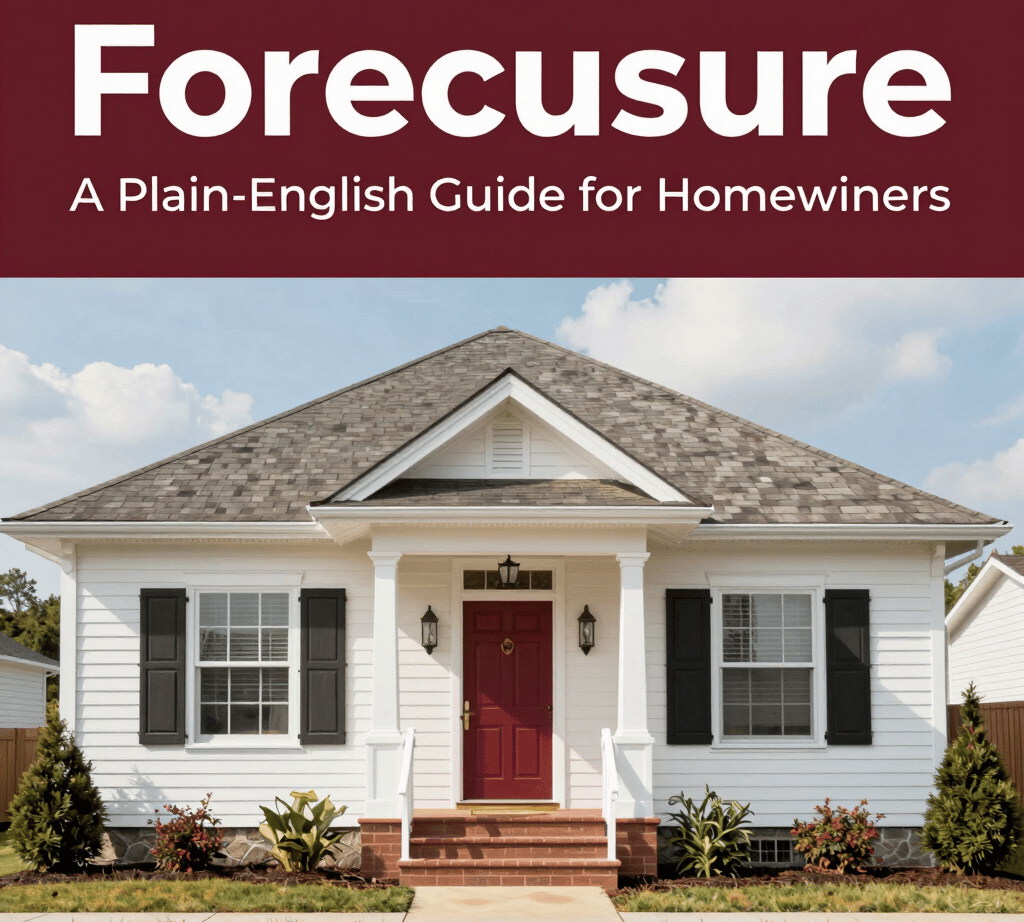
What Is Foreclosure? A Plain-English Guide for Homeowners
If you've fallen behind on your mortgage and the word "foreclosure" keeps showing up in letters, phone calls, or your late-night Google searches — this guide is for you. No legal jargon, no scare tactics. Just a clear explanation of what foreclosure actually means, how it works, and what you can do about it.
What Foreclosure Actually Means
Foreclosure is the legal process a lender uses to take back your home when you stop making mortgage payments. When you took out your mortgage, you signed an agreement that said the house itself serves as collateral for the loan. If you stop paying, the lender has the legal right to sell the property to recover what they're owed.
But here's what most people don't realize: foreclosure is not an overnight event. It's a process that unfolds over weeks and months, and at almost every stage, you have options to slow it down, stop it, or find a better path forward.
How the Foreclosure Process Works
While the details vary by state, the general process follows a predictable pattern.
Stage 1: Missed Payments (Day 1 – Day 90) It usually starts with one missed payment. Life happens — a job loss, a medical emergency, a divorce, unexpected expenses. Your lender will start calling and sending letters. At this stage, most lenders are willing to work with you on a repayment plan or forbearance agreement. This is the easiest time to fix things, and the time most people waste because they're embarrassed or hoping things will just get better.
Stage 2: Default and Notice of Default (Day 90 – Day 120) Under federal law, your lender cannot begin foreclosure proceedings until you are at least 120 days past due. Once you cross that threshold, your lender can file a Notice of Default, which is a formal, public document that says you're behind and the foreclosure clock has officially started.
Stage 3: Pre-Foreclosure (Varies by State) After the Notice of Default, you enter what's called "pre-foreclosure." This is a critical window where you still own your home and still have the most options available. Depending on your state, this period can last anywhere from 90 days to several months. During this time, you may be able to negotiate a loan modification, enter a leaseback program, arrange a short sale, or file for bankruptcy protection.
Stage 4: Notice of Sale / Foreclosure Auction If no resolution is reached during pre-foreclosure, your lender will schedule your home to be sold at auction. You'll receive a Notice of Sale with the date and location. Even at this stage, options may still exist — but they're more limited and time-sensitive.
Stage 5: Auction and Post-Foreclosure At the auction, your home is sold to the highest bidder — often the lender itself. After the sale, you'll typically receive a notice to vacate the property. In some states, you may have a brief "redemption period" to buy the home back. In others, the sale is final.
Why Foreclosure Timelines Are Different in Every State
This is important: the state you live in dramatically affects how much time you have and what rights you have.
Some states, like Arizona and California, use what's called "nonjudicial" foreclosure. This means the lender doesn't need a judge's approval to sell your home. The process can move quickly — sometimes in as little as 90 to 120 days after the Notice of Default.
Other states, like Illinois, use "judicial" foreclosure. Every step goes through the court system, which means the process typically takes 12 to 15 months — sometimes longer. You also have more opportunities to contest the foreclosure and negotiate.
No matter which state you live in, the most important thing is understanding your specific timeline and acting before your options shrink.
What Foreclosure Does to Your Finances
Foreclosure affects more than just your housing situation. Here's what's at stake:
Your credit score will drop significantly — typically 100 to 150 points or more. A foreclosure stays on your credit report for seven years, making it harder to rent an apartment, get a car loan, or qualify for another mortgage.
Your equity — the value you've built in your home over the years — can be lost. If your home sells at auction for less than it's worth, you may walk away with nothing. In some states, the lender can even pursue you for the remaining balance (called a "deficiency judgment").
Your tax situation may be affected. In certain cases, forgiven mortgage debt can be treated as taxable income by the IRS.
Your family's stability takes a hit. Foreclosure often means uprooting your household, changing schools, and dealing with the emotional toll of losing your home.
You Have More Options Than You Think
Here's the part most homeowners don't hear enough: foreclosure is not inevitable, even if you've already received a notice. Depending on your situation, you may be able to:
Get a loan modification — Your lender agrees to change the terms of your mortgage (lower interest rate, extend the term, reduce the principal) to make your payments affordable again. This lets you keep your home.
Enter a leaseback program — An investor purchases your home and leases it back to you, allowing you to stay in the house while you stabilize your finances. This protects your equity and your credit score.
Negotiate a forbearance plan — Your lender temporarily pauses or reduces your payments to give you breathing room during a financial hardship.
File for bankruptcy — A Chapter 13 bankruptcy filing triggers an "automatic stay" that immediately stops foreclosure proceedings and gives you time to catch up on payments over a 3 to 5 year repayment plan.
Arrange a short sale — If keeping the home isn't realistic, you sell it for less than what's owed with your lender's approval. This is far less damaging to your credit than a full foreclosure.
The right option depends on your specific situation — your state's laws, how far behind you are, how much equity you have, and what your financial picture looks like going forward.
What to Do Right Now
If you're reading this because you're worried about foreclosure, here are three things to do today:
First, don't ignore your lender's calls and letters. Avoiding the problem is the single most common mistake homeowners make, and it's the one that costs them the most options.
Second, learn your state's foreclosure timeline. If you're in Arizona, California, or Illinois, we have specific guides for each state on this site.
Third, talk to someone who's been through this before. Not a bot. Not a call center. A real person who understands the foreclosure process and can review your situation for free.
At Foreclosure Prevention, we've spent over 30 years helping families navigate exactly this situation. We offer a free, confidential consultation where we review your case and walk you through your options — with zero pressure and zero obligation.
Ready to take the first step? Book your free consultation today: Email: help@keepmyhome.help
Disclaimer: We are Real Estate Professionals and Loss Mitigation Consultants, not attorneys. All legal matters are referred to qualified professionals in our network.
Put Us On Your Front line
Help Stop Foreclosure with Expert Guidance Now !!!!!!
Contact
help@keepmyhome.help
© 2025. All rights reserved.